Why Your German Ancestors' Records Might Be Sitting in Denmark, Poland, or Russia
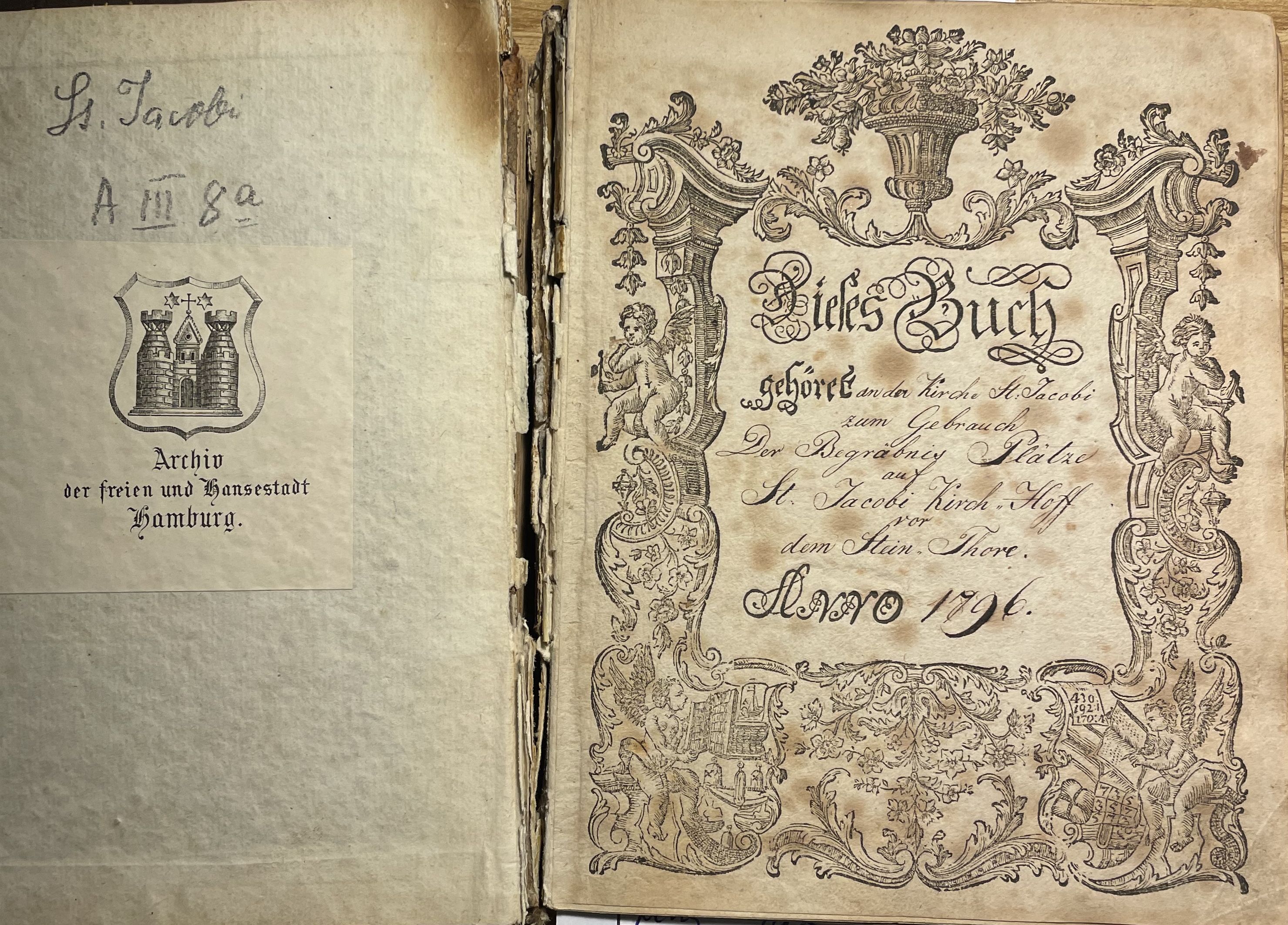
Today is International Archives Day.
Every June 9th, the global archival community celebrates the institutions that quietly hold our collective memory together. This year's theme, chosen by the International Council on Archives, is #ArchivesForJustice: Rights, Memory & Futures, a reminder that archives are not dusty storage rooms, but active guardians of evidence, identity, and truth.
For genealogists, that theme hits close to home. The records that prove where we come from, who our ancestors were, and what their lives looked like all live in archives. And here is something most people researching German roots discover sooner or later, usually the hard way:
The vast majority of records relevant to German genealogy are still only available in archives. Only a small fraction has made it online.
That estimate is not just a vague assumption. In conversations with German archivists, I have repeatedly heard figures in the range of "perhaps around 10%" being digitized so far. At the same time, that number is constantly shifting. New material is going online every day across platforms like FamilySearch, Archion, Matricula, Ancestry, MyHeritage and archival websites themselves. But even with that steady progress, what you can access from your desk is still only a small slice of what actually exists.
Let that sink in for a moment. If you have been researching entirely from your couch using the databases and digital images on Archion, Matricula, MyHeritage, Ancestry, and FamilySearch, you have been working with a fraction of the available records. The rest is waiting in physical archives, much of it never digitized, some of it never even indexed,, simply because archives lack the capacity to do more.
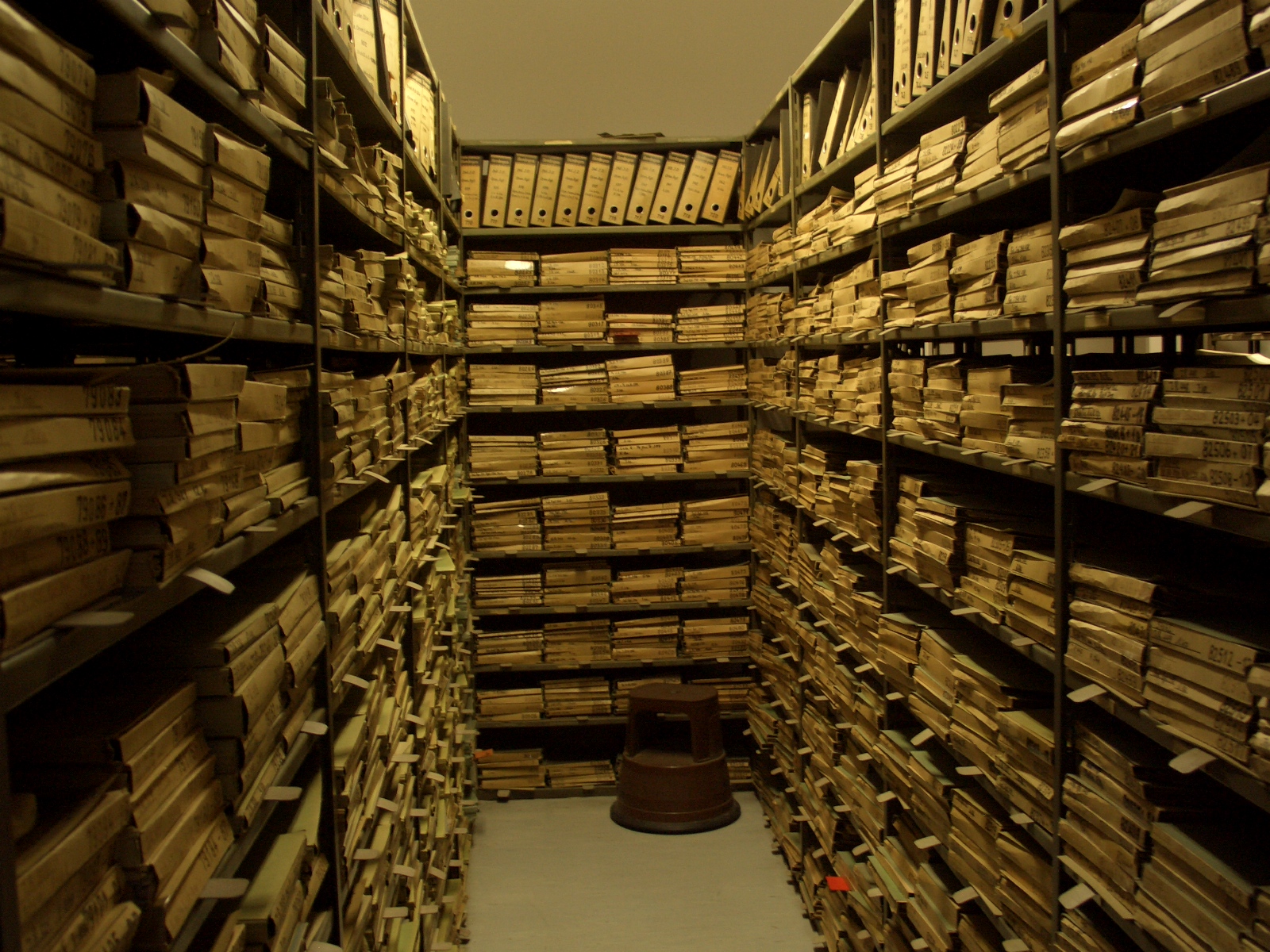
If you have ever wondered why German genealogy records are in Poland, Denmark, or Russia instead of Germany, the answer lies in how archives follow history, not modern borders.
And here is the twist that makes German research particularly tricky: those archives are not all in Germany.
Where Are German Records Kept? The One Principle That Gets You Started
Before the examples, here is the single most useful idea for finding a record. The location of a document is often not determined by which country the place sits in today. More often, it follows which administrative power governed that place at the time the record was created.
Records tended to follow the authority that produced them. So the most productive first question is usually not "what country is this town in now?" It is "who was in charge there when this was written, and where did that government's records end up?" Once you start thinking this way, records that seemed lost suddenly have a plausible address.
But, and this matters, German genealogy almost never runs on a single clean rule. There are nearly as many exceptions as there are cases, and the real history of these records is messier, and more interesting, than any tidy principle. A few examples of how the paper trail can defy expectations:
Originals sometimes stayed put. In many cases, original German vital records and church books remained where they were and are now held in Polish state archives.
Records were exchanged after the war. Holdings shifted between countries for all sorts of reasons. Many of the records used for the Nuremberg Trials, for instance, were later transferred to the Federal Archives in Germany, while others remain distributed internationally.
And the present matters too. Current conflicts and crises around the world pose a real threat to archive holdings, and can cut off the exchange of records and knowledge that researchers rely on. Where a record is safely accessible today is not guaranteed to stay that way.
Some collections, in fact, ended up somewhere almost nobody would guess, for reasons that have nothing to do with logic and everything to do with the people and history behind them. (That is a story for another post.)
So treat the "who governed it then" question as your compass, not your map. It points you in the right direction more often than not. But the actual route to a specific document still takes local knowledge, and usually a conversation with someone who knows that particular collection's history. Which, as we will see, is exactly why archivists are worth their weight in gold.
Schleswig-Holstein: Why Records Are in Denmark and Berlin
Take my own corner of the world. Schleswig-Holstein, in northern Germany, was for long stretches of history under Danish rule. The Duchy of Schleswig in particular was tied to the Danish crown, and it was not until the wars of the 1860s that the region came firmly under Prussian, and later German, control.
This is the principle in action. For the earlier periods, the records you need may be held in Danish archives, written in or alongside Danish administrative systems, and organized according to Danish practices of the time. A family that never moved an inch could appear in Danish records in one century and German records in the next.
But here is the part most people miss: after 1867, Schleswig-Holstein became a Prussian province. And because it was administered by Prussia, certain records about Schleswig-Holstein families ended up in Prussian central archives in Berlin, the same Berlin holdings people often associate with the eastern territories. So a northern German ancestor's trail can lead you to Denmark for one era and to Berlin for another, with neither one being where you would instinctively look first.
If you hit a wall researching a Schleswig-Holstein ancestor and you have only been looking in the present-day local archive, you may simply be looking in the wrong place, or the wrong era's place.
German Eastern Territories: Why Records Are in Poland, Russia, and Lithuania
This is where it gets even more complex, and where researchers get stuck most often.
Before World War II, Germany extended much farther east than it does today. Provinces like East Prussia, Silesia, Posen, and Pomerania were part of the German state, with German-speaking populations, German church books, and German civil records. After 1945, these territories became part of Poland, the Soviet Union (today's Russia and Lithuania), and other states.
The people were largely expelled or fled. The records are a different story.
The same principle applies: it was Prussia that administered most of these provinces, so a significant portion of administrative material never left Germany at all and is still held in Berlin today. At the same time, many records remained in the territories themselves and are now preserved in Polish, Russian, and Lithuanian archives. Others were displaced, duplicated, or redistributed.
So the real picture is split. Where your record actually sits depends on the type of record, the region, and what survived the war. It may be:
In the Geheimes Staatsarchiv Preußischer Kulturbesitz in Berlin, which holds extensive Prussian administrative records connected to the former eastern provinces.
In Polish state archives (for much of Silesia, Posen, Pomerania, and southern East Prussia).
In Russian archives, particularly in Kaliningrad (the former Königsberg), for northern East Prussia.
In Lithuanian archives (for the northeastern edge of East Prussia).
In central German archives, including some displaced or administrative Protestant church holdings now preserved in the Evangelical Central Archives in Berlin.
A descendant of a family from Breslau (today Wrocław, Poland) or Königsberg (today Kaliningrad, Russia) is often researching across an international archival landscape, whether they realize it or not. And sometimes the document they have been hunting for abroad turns out to have been sitting in Berlin the whole time.
Silesia and Posen: Why Records Are Scattered or Missing
Silesia and Posen deserve their own mention because their record survival is such a patchwork. Some church books made it to safety. Some were destroyed. Some were duplicated, with the original in one country and the copy in another.
The practical lesson: when a record from these regions seems to have vanished, it has often not vanished at all. It has simply relocated, sometimes more than once.
How to Find German Records Across International Archives
This is exactly where archivists become your most valuable allies, and why today's celebration matters.
Archivists are the people who know which holdings survived, which were transferred, which were duplicated, and where everything ended up. They navigate finding aids that can feel impenetrable to outsiders. They understand the history of their own collections in ways no database ever will. In more cases than I can count, a single conversation with the right archivist has cracked a case that years of online searching could not.
If you want to research German ancestors seriously, you will eventually need to work with archives directly, and with the people who run them. The material available online is a wonderful starting point. The breakthrough usually lives beyond it.
How to Find Newly Digitized German Records (Before Everyone Else)
Here is a tip that costs you nothing and pays off surprisingly often.
More and more archives now have an active social media presence, and they use it to announce exactly the things genealogists care about: newly digitized collections, newly opened holdings, special exhibitions, finding-aid updates, and behind-the-scenes looks at what they hold. Following them is one of the easiest ways to hear about a new online collection the moment it goes live.
A few worth following to get you started:
Das Bundesarchiv (@bundesarchivd): Germany's national archive, with a genuinely active and lively feed
Landesarchiv Baden-Württemberg (@landesarchivbw)
Landesarchiv Berlin (@landesarchivberlin)
And do not stop there. Search for the regional, state, and church archives relevant to your families' specific origins. Many Polish and other international archives holding former German records have social channels too. And do not overlook the local genealogical societies. They often know their region's records, and where the gaps are, better than any database.
The Bigger Picture: Why This Is About Justice
Remember this year's theme: #ArchivesForJustice: Rights, Memory & Futures. When you look at the scattered records we have been talking about, that theme stops being abstract.
Think about what these displaced records actually represent. When families were expelled from East Prussia, Silesia, or Pomerania, they often lost everything physical. What remained was the paper: the baptismal entry, the marriage record, the citizenship file.
For those families and their descendants, the surviving records became the only remaining proof of who they were, where they belonged, and what was lost. That is not nostalgia. That is evidence: the foundation for property and restitution claims, for citizenship, for reuniting families separated by borders and war, for restoring a documented identity to people whose homeland was redrawn around them.
This is precisely what archives protect. Rights, because records are proof. Memory, because when a place is erased, the archive is what is left. Futures, because a family that can find its story can pass it on.
Archives preserve the evidence of ordinary lives. They protect those traces against being forgotten.
The borders moved. The records, against considerable odds, often survived. And the archivists who safeguarded them, across Germany and across every border that redrew itself around these collections, are the reason your family's story is still findable at all.
On International Archives Day, that is worth more than a thank you. It is worth understanding.
So today, a thank you to the archivists. And to you: happy hunting. Your record may be waiting somewhere you have not thought to look yet, and quite possibly closer to Berlin than you would expect.
