The Ice Saints, the Sheep Cold, and Why Your German Ancestors Watched the Sky
Your ancestors did not check a weather app. They did not even check a thermometer in most centuries. What they had instead was a tightly woven calendar of saints' days, farm rhythms, and proverbs handed down across generations, refined by anyone who had ever lost a crop to a late frost or a flock of sheep to a wet June.
This system can reveal a story behind church that tells a lot more than just when something happened.
The Ice Saints (Eisheilige): When May Turns on You
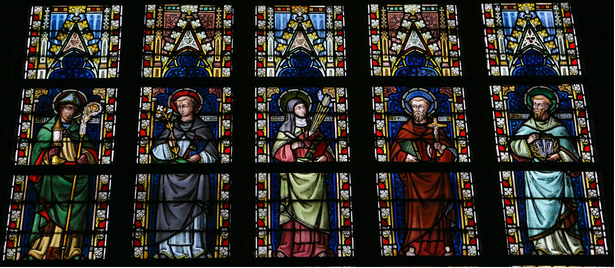
Every gardener in Germany still knows the rule: do not plant the tomatoes before the Eisheilige. The Ice Saints are five feast days clustered between May 11 and May 15, named for the cold snap that tends to settle over Central Europe in this stretch.
The lineup, depending on which region you grew up in:
Mamertus (May 11), mostly observed in northern Germany
Pankratius (May 12)
Servatius (May 13)
Bonifatius (May 14)
Sophie (May 15), better known as Kalte Sophie, “Cold Sophie,” the gatekeeper of summer planting
These were not arbitrary choices. Over generations, farmers noticed a real meteorological pattern: a polar air mass tends to push south across Central Europe in mid-May, just as fruit trees are blossoming and tender crops are going in the ground. One bad night could wipe out the year's plums or the early beans.
The rhyme that survived in Franken, Bayern, and far beyond captures the gravity:
“Pankraz, Servaz, Bonifaz, machen erst dem Sommer Platz.” (Pankraz, Servaz, and Bonifaz must first make way for summer.)
If your ancestors farmed, mid-May was a held breath. Once Cold Sophie had passed, the year could begin in earnest.
Schafkälte: The Sheep Cold
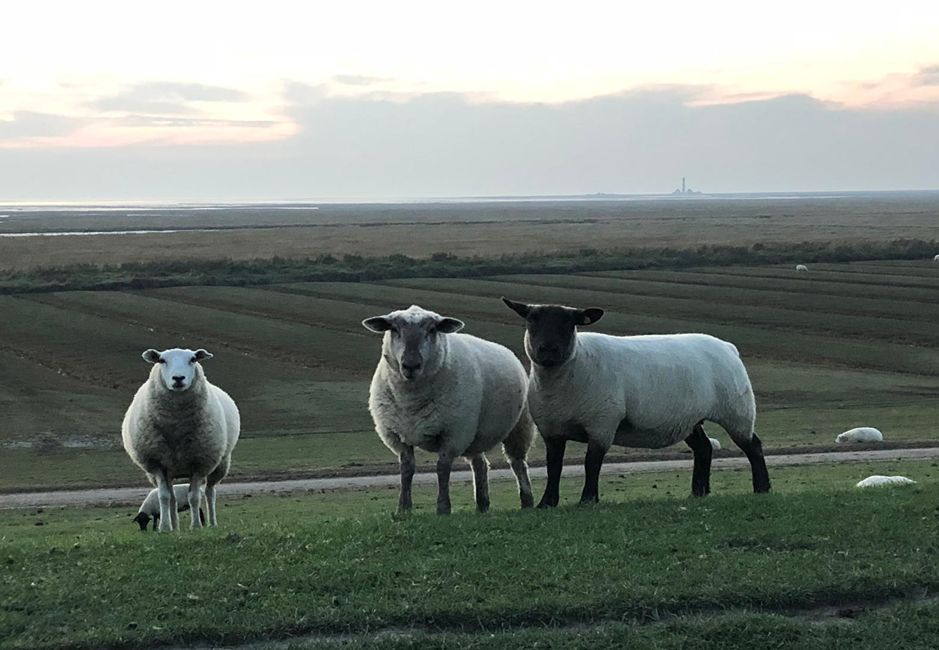
Just when summer feels safely arrived, Germany serves up one more surprise: the Schafkälte, the “sheep cold,” a cold snap that typically rolls in around June 11.
The name is exactly as ridiculous and practical as it sounds. Sheep were traditionally shorn in late May or early June. A few weeks later, when wet and cool air from the North Atlantic pushed in, the newly shorn flock was caught freshly naked at the wrong moment. Lambs huddled. Shepherds worried. Animals were sometimes lost.
Like the Eisheilige, the Schafkälte is a real climatological phenomenon, a documented weather Singularität that recurs often enough to have earned its own folk name. Your ancestors did not know the physics. They knew, generation after generation, not to plan around it.
The Bauernkalender and the Bauernregeln
The Ice Saints and the Sheep Cold are just two entries in a much larger system: the Bauernkalender, the farmer's calendar, paired with the Bauernregeln, the weather rhymes and rules that encoded centuries of observation.
A small sampler:
Lichtmess (February 2): “Lichtmess hell und klar, gibt ein gutes Jahr.” (Candlemas bright and clear, brings a good year.)
Siebenschläfertag (June 27, Sleeper's Day): “Wie das Wetter am Siebenschläfertag, so es sieben Wochen bleiben mag.” (However the weather behaves on Sleeper's Day, so it stays for seven weeks.)
Mairegen: “Mairegen bringt Segen.” (May rain brings blessings.)
Martinstag (November 11): “Hat St. Martin einen weißen Bart, wird der Winter lang und hart.” (If St. Martin has a white beard, winter will be long and hard.)
It is easy to dismiss these as folksy charm. They are not. They are observational science in verse form, a way of passing down hard-won probabilities in an era before instruments. Some of them, like the Siebenschläfer rule, line up surprisingly well with weather patterns modern meteorologists still track in late June and early July over Central Europe. Your ancestors had been doing data analysis for centuries. They just used rhyming couplets to store the dataset.
Why This Belongs in Your Genealogy Research
Look at almost any German parish marriage register, and the dates are not evenly distributed across the year. You will see clusters, and the clusters tell a story.
Marriages cluster in November. Harvest is in, larders are full, but Advent has not yet closed the doors on weddings. The window between Erntedank and the first Advent Sunday was prime time. If your ancestors married on November 18, that is not random, it's linked to this calendar.
Marriages cluster again in January and February. The Christmas season ends with Epiphany, and the weeks before Lent open up another wedding window. After Aschermittwoch (Ash Wednesday), weddings effectively stopped until after Easter in Catholic regions.
Marriages almost never happen during harvest. August through early October, the entire family was in the fields. Nobody had time for a wedding feast, and the pastor knew it.
Then there are the contract dates, which show up everywhere in records:
Lichtmess (February 2): Major contract day for farm servants, especially in southern Germany. The annual Gesindewechsel, when Knechte and Mägde changed employers, was tied to this day.
Walpurgis (April 30): A contract date in some regions, particularly in the north.
Michaelis (September 29): A post-harvest contract day in many areas.
Martinstag (November 11): The big one in much of Germany. Rents were paid, employment shifted, the agricultural year reset.
All Saints / October 31: In some regions, the symbolic end of the farm year, when tenancies and leases changed hands.
If you find an ancestor listed as a household member in one village in October and another in November, that is not a mystery. That is Martinstag doing exactly what Martinstag did.
Then there is the darker side of the calendar. Cold springs killed crops, and crop failures killed people. The most famous example: 1816, the “Year Without a Summer,” when ash from the 1815 Tambora eruption in Indonesia produced crop failures and famine across Europe. The years 1816 and 1817 drove one of the largest emigration waves from southwest Germany to America. If you have a Baden or Württemberg ancestor who left in 1817 or 1818, the weather is very likely part of the reason.
When you see a burial spike in a parish in 1816, 1817, 1740, or 1771, you are not looking at coincidence. You are looking at frost.
What Was the Weather Like the Day Your Ancestor Left?
This is one of those small research details that quietly transform a family story. For ancestors who emigrated after 1881, weath records going back well over a century can be found here: https://www.wetterzentrale.de/en/weatherdata_de.php. You can look up temperature, precipitation, and conditions for almost any German weather station, on the actual date your ancestor boarded a ship.
For everything before 1881, there is something even more interesting: Tambora.org, a collaborative historical climatology database. It holds hundreds of thousands of records pulled from weather diaries, chronicles, pamphlets, official reports, and newspapers across Central Europe, reaching back to 1500. You can search by place and date and find what people at the time actually wrote down about the weather, the harvest, the floods, the storms.
Beyond these two, check the Heimatbuch and parish chronicles for your ancestor's village. Bad weather years tend to be remembered locally, often in vivid detail. A line in a village chronicle about “ein schwerer Winter” the year before your great-great-grandfather emigrated is not just atmosphere. It is context that explains a decision.
The Bigger Picture
Your German ancestors lived inside a layered calendar: the church year, the agricultural year, and the weather year. These three calendars overlapped, sometimes argued, and together produced the records you are now reading. The Ice Saints decided when planting started. The Sheep Cold decided when summer felt safe. The Bauernregeln decided when to harvest, when to hope, and when to brace.
Understanding any of this does not just add color to your family history. It adds meaning. The date on the page is no longer just a date. It is a moment inside a system, and that system was lived by real people who were paying very close attention to the sky.
Want to learn how to read your ancestors' world the way they lived it? At the German Genealogy Collective, we do this together: live Q&A sessions, masterclasses, co-research evenings, and a community of researchers who know the records, the regions, and the rhythms. You do not have to figure German genealogy out alone.
Join us at https://germangenealogycollective.com/
